
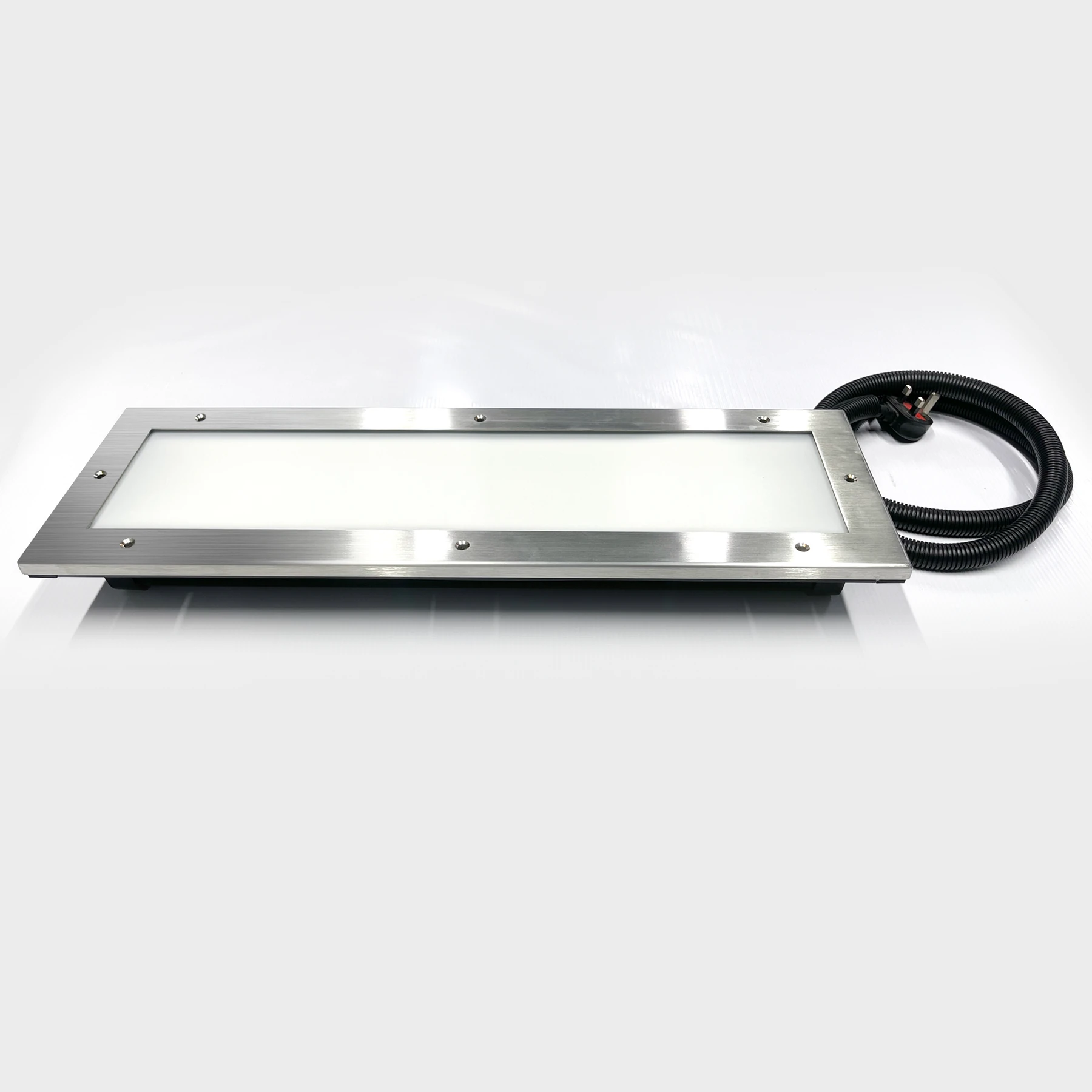
Built-in equipment lighting
Use this approach when the fixture is installed into a hood, canopy or other fabricated kitchen equipment.
Integrated kitchen lighting is designed as part of commercial kitchen equipment, commonly inside a stainless-steel ventilation hood. Length, cut-out, mounting, wiring and service access are coordinated with the equipment.
Use the relevant conditions below to decide whether the topic applies to the installation being reviewed.
Use this approach when the fixture is installed into a hood, canopy or other fabricated kitchen equipment.
Apply it where the equipment manufacturer controls the cut-out, mounting and electrical interface.
It is especially useful when a documented configuration will be repeated across similar units.
These are common reasons a seemingly suitable product path needs further project review.
Selecting the light after fabrication can create avoidable conflicts in cut-out, depth and wiring.
A replacement needs to preserve the approved interface and service requirements.
The fixture’s enclosure does not automatically validate the complete equipment interface.
Confirm the project requirements and current documents before making a suitability or compliance decision.
Control the cut-out, fixing method, cable route, connection point and accessible service path.
Use current drawings, datasheets, installation instructions and approved accessory information.
Confirm the project standards and approvals applied by the equipment manufacturer and customer.
Use the checklist to prepare the technical information that a supplier, equipment manufacturer or project reviewer will need.
Published cases state their evidence boundary and do not infer confidential site data or unverified performance outcomes.
Review the published scope covering heat, grease, cleaning access and integrated-lighting constraints.
Read published case → Food processing · Region confidentialReview the documented cleaning exposure, humidity and service-access considerations.
Read published case →Continue with a related topic or send the project inputs needed for a specific recommendation.
Share the application, environment, cleaning method, drawings and required documentation.