
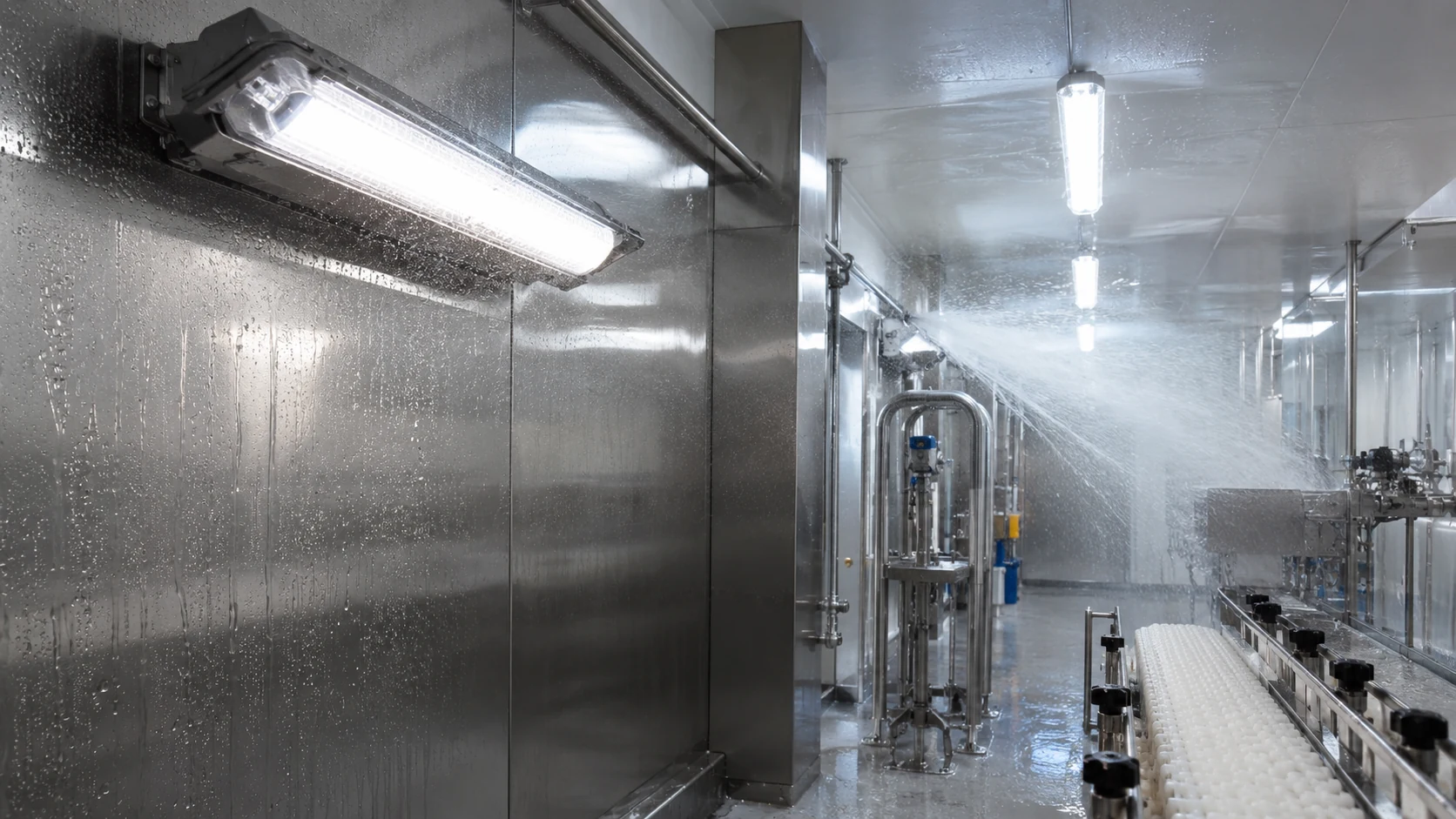
Different cleaning methods
Use this comparison when choosing between dust/water protection paths for a real cleaning process.
IP65 and IP69K represent different ingress-test conditions. Project suitability still depends on the actual cleaning process, installation and approved documentation.
Use the relevant conditions below to decide whether the topic applies to the installation being reviewed.
Use this comparison when choosing between dust/water protection paths for a real cleaning process.
Assess exposure at the actual mounting position rather than the general room classification.
Apply it when an existing rating is being carried into a new environment or cleaning regime.
These are common reasons a seemingly suitable product path needs further project review.
A higher number is not a substitute for understanding cleaning pressure, distance, temperature and direction.
Cable entries, mounting surfaces and equipment interfaces may be more exposed than the enclosure body.
Do not infer product suitability from a product name or uncontrolled marketing claim.
Confirm the project requirements and current documents before making a suitability or compliance decision.
Document water source, nozzle, distance, temperature, chemicals, frequency and fixture orientation.
Review the relevant test evidence, current datasheet and installation instruction for the proposed model.
Confirm the standard and approval criteria required by the customer, facility or equipment project.
Use the checklist to prepare the technical information that a supplier, equipment manufacturer or project reviewer will need.
Published cases state their evidence boundary and do not infer confidential site data or unverified performance outcomes.
Review the published scope covering heat, grease, cleaning access and integrated-lighting constraints.
Read published case → Food processing · Region confidentialReview the documented cleaning exposure, humidity and service-access considerations.
Read published case →Continue with a related topic or send the project inputs needed for a specific recommendation.
Share the application, environment, cleaning method, drawings and required documentation.